Nine services.
One standard of work.

Each service below describes what it covers, the business needs that usually prompt it, how delivery is organised, and the outcomes it is intended to support.

01 / Service

Custom software development

Design and construction of applications built for a specific operational need, from data model and domain logic through to interfaces and deployment. Includes discovery, architecture, implementation, automated testing and release engineering.

Typical business needs

  • An off-the-shelf product cannot express how the business actually works
  • Processes are held together by spreadsheets and manual steps
  • Several tools partially cover a workflow that should be one system

Delivery approach

Work begins with a written specification of the domain and its rules. Implementation proceeds in reviewable increments, each deployable to a test environment, with acceptance criteria agreed in advance.

Potential outcomes

  • A system that matches the real process rather than an approximation of it
  • Documented interfaces and data structures owned by your organisation
  • A codebase with tests that make later change less risky
02 / Service

Web application development

Browser-based applications and interfaces: front-end architecture, server-rendered and client-rendered views, API design, authentication flows, accessibility and performance work across device sizes.

Typical business needs

  • An internal tool needs to be reachable from any device without installation
  • An existing interface is slow, inaccessible or unusable on smaller screens
  • A product requires a public web surface with predictable behaviour

Delivery approach

Interface structure is agreed as semantic markup and states before styling. Accessibility and performance budgets are defined at the start and verified as part of the build rather than reviewed afterwards.

Potential outcomes

  • Interfaces that respond well on constrained networks and older devices
  • Keyboard-operable, screen-reader-friendly components
  • A front-end codebase organised for incremental extension

03 / Service

Cloud solutions

Cloud architecture and operations: containerised workloads, infrastructure as code, environment separation, networking, storage, backup strategy, autoscaling and cost visibility.

Typical business needs

  • Environments differ from each other and deployments behave unpredictably
  • Infrastructure exists only as manual console configuration
  • Cloud spend is rising without a clear picture of what causes it

Delivery approach

Infrastructure is described in code and version-controlled alongside the application. Environments are recreated from that description, and changes pass through the same review path as application code.

Potential outcomes

  • Reproducible environments that can be rebuilt from source
  • Deployment paths that are documented and automated
  • Clearer relationship between running resources and their cost

04 / Service

System integration

Connecting applications that were never designed to work together: API and event-based interfaces, data mapping and transformation, synchronisation strategy, error handling and reconciliation.

Typical business needs

  • Data is re-keyed by hand between two or more systems
  • A supplier or partner interface must be consumed reliably
  • Records disagree between systems and no one can tell which is correct

Delivery approach

Each integration begins with an explicit contract: fields, formats, ordering guarantees and failure behaviour. Retries, idempotency and reconciliation are designed before the first message is sent.

Potential outcomes

  • Automated exchange in place of manual transfer
  • Traceable message flow with defined behaviour on failure
  • A reduction in the number of places the same fact is entered

05 / Service

IT consulting

Technical assessment and planning: architecture review, technology selection, delivery process evaluation, risk identification and roadmapping for systems that need a direction rather than immediate construction.

Typical business needs

  • A decision about rebuilding, extending or replacing a system must be made
  • Delivery has slowed and the cause is unclear
  • An external technical perspective is required before committing budget

Delivery approach

We review code, infrastructure and process, interview the people who operate the system, and produce a written assessment with options, trade-offs and a recommended sequence.

Potential outcomes

  • A documented view of the current state and its constraints
  • Options described with their consequences rather than a single verdict
  • A prioritised sequence of work that can be started incrementally

06 / Service

Software modernisation

Stepwise renewal of ageing systems: dependency and runtime upgrades, decomposition of monolithic components, data migration, test coverage for untested code and removal of dead functionality.

Typical business needs

  • A platform runs on unsupported frameworks or runtimes
  • Small changes require disproportionate effort and carry high risk
  • Knowledge of the system has left the organisation

Delivery approach

Behaviour is captured in tests before it is changed. Modernisation proceeds behind stable interfaces so the running system continues to serve the business during the work.

Potential outcomes

  • Supported dependencies and a maintainable runtime
  • Restored ability to change the system with confidence
  • Documentation of behaviour that previously existed only in the code

07 / Service

Quality assurance

Verification practice across the delivery cycle: test strategy, automated unit, integration and end-to-end suites, regression protection, exploratory testing and defect triage.

Typical business needs

  • Defects are discovered by users rather than before release
  • Manual regression testing has become the bottleneck
  • There is no agreed definition of when work is finished

Delivery approach

A test strategy is defined against risk: what must never break, what can be checked automatically, and what still requires human judgement. Suites run in the pipeline on every change.

Potential outcomes

  • Faster feedback between writing a change and knowing it is sound
  • Regression protection for the paths the business depends on
  • A shared, explicit definition of done

08 / Service

Cybersecurity-focused engineering

Security work embedded in development: threat modelling, authentication and authorisation design, secret management, dependency review, secure configuration and logging that supports investigation.

Typical business needs

  • A system handles personal or financial data and must demonstrate care
  • Access rules have grown ad hoc and are no longer verifiable
  • Credentials and configuration are scattered across environments

Delivery approach

Threats are modelled against the specific system rather than a generic checklist. Controls are implemented as code, verified by tests, and reviewed whenever the architecture changes.

Potential outcomes

  • Access rules that are explicit, reviewable and enforced in one place
  • Managed secrets and configuration separated from source code
  • Logging and alerting sufficient to investigate an incident

09 / Service

Technical support and maintenance

Ongoing responsibility for running systems: monitoring, incident response, dependency and platform updates, performance tuning, backup verification and small continuous improvements.

Typical business needs

  • A live system has no one clearly responsible for its upkeep
  • Updates are deferred until they become urgent and disruptive
  • Problems are noticed by users before they are noticed by monitoring

Delivery approach

Monitoring and alerting are established first so that issues surface early. Maintenance is scheduled, recorded and reported, with escalation paths agreed in writing.

Potential outcomes

  • Earlier detection of faults and degradation
  • Dependencies kept current instead of accumulating risk
  • A documented history of changes made to the running system
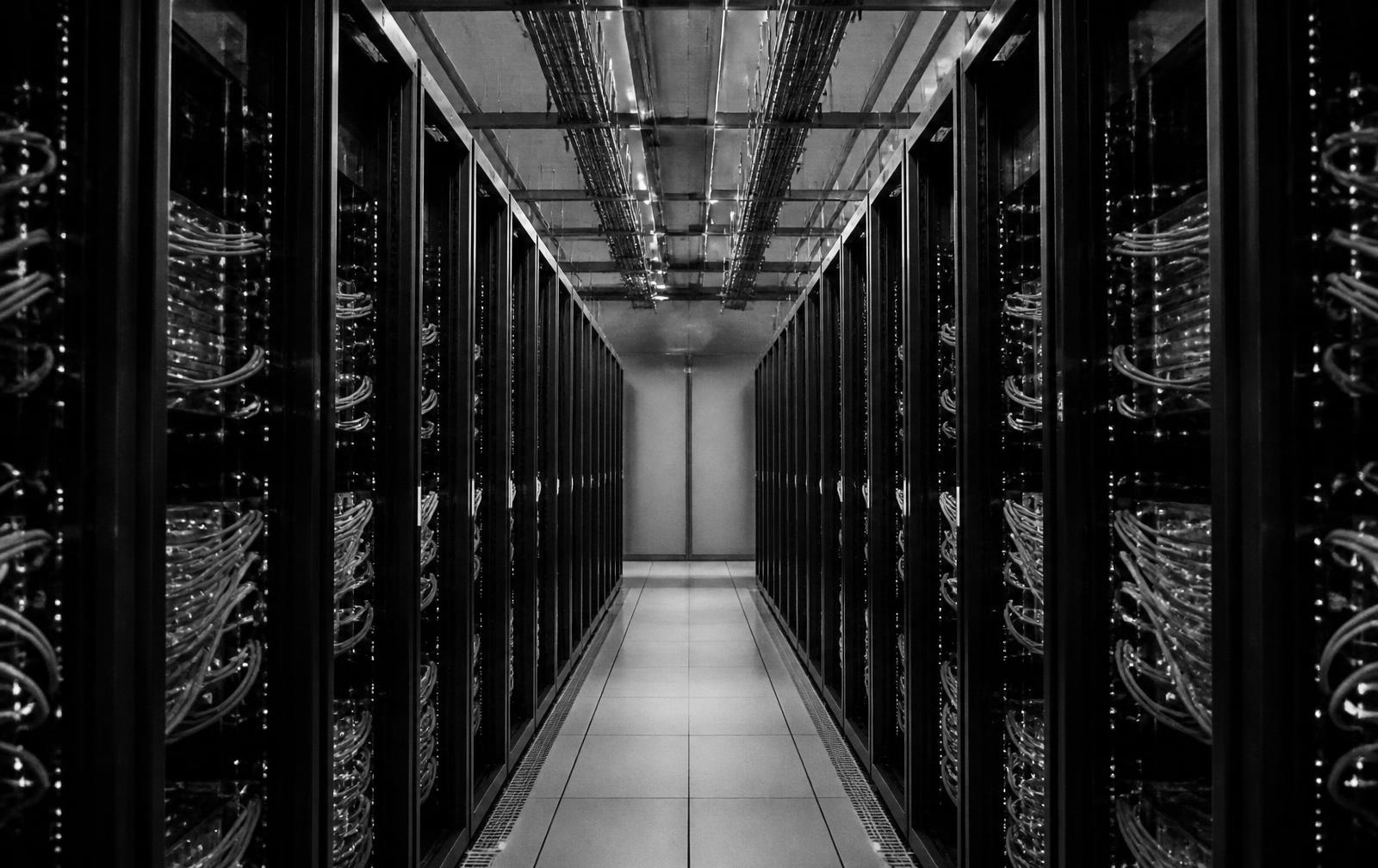
Rows of server cabinets with fibre and copper cabling in a controlled environmentDetail of network switch ports and integrated circuits on a printed circuit board

Scope note

Outcomes described here are intentions, not guarantees.

Results depend on the state of the existing systems, the decisions available to the organisation and the constraints under which the work is carried out. We describe what a service is designed to achieve and discuss its limits before an engagement begins. Enquiries: ellencarpenter19960@gmail.com